

Are meat blender machines compatible with different power supplies?
May 19, 2025
Leave a message
Hey there! As a supplier of meat blender machines, I often get asked a ton of questions from customers. One question that pops up quite a bit is, "Are meat blender machines compatible with different power supplies?" Well, let's dig into this topic and find out the deal.

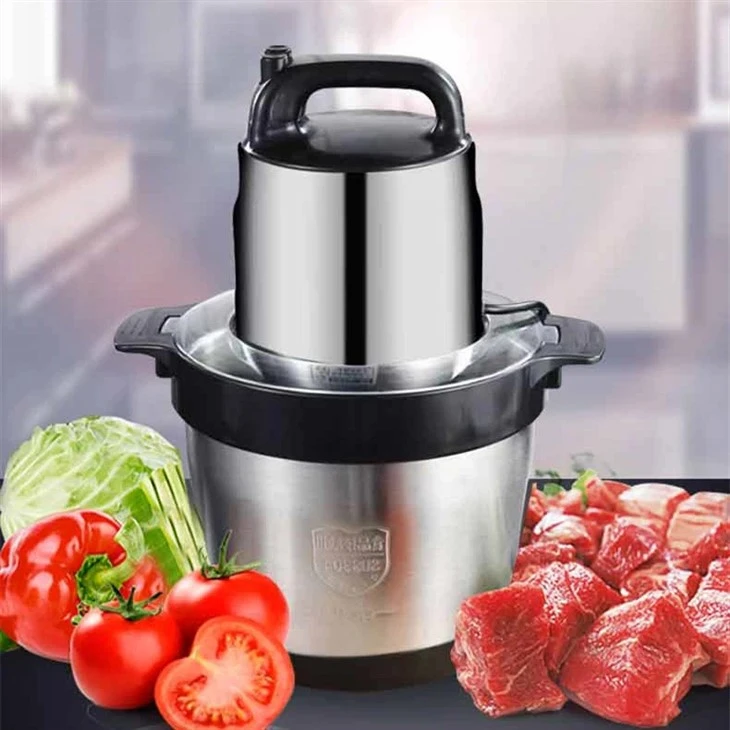
First off, let's talk about what a meat blender machine is. It's a super - handy tool for anyone who loves cooking with meat. Whether you're making burgers, sausages, or just need to grind up some meat for a stew, a meat blender machine can make your life a whole lot easier. We've got different types of meat blender machines in our inventory, like the [Meat Grinder 2025](/meat - grinder/meat - grinder - 2025.html), [Electric Meat Grinder](/meat - grinder/electric - meat - grinder.html), and [Small Meat Grinder](/meat - grinder/small - meat - grinder.html). Each one has its own unique features and is designed to meet different needs.
Now, let's get to the main question: power supply compatibility. You see, different countries and regions have different power supply standards. The most common ones are voltage and frequency. In the United States, the standard voltage is around 120V and the frequency is 60Hz. On the other hand, in many European countries, the standard voltage is 230V and the frequency is 50Hz.
Most meat blender machines are designed to work with a specific power supply. For example, if a meat grinder is made for the US market, it's likely designed to run on 120V, 60Hz power. If you try to plug it into a 230V power supply, bad things can happen. The motor might overheat, the machine could break down, or in the worst - case scenario, it could even pose a safety hazard.
However, there are some meat blender machines that are more versatile. These are called dual - voltage or multi - voltage machines. They can work with different voltages, usually with the help of a switch on the machine. For instance, you can switch between 120V and 230V depending on where you are. This is really great for people who travel a lot or for businesses that export meat blender machines to different countries.
But it's not just about the voltage. The frequency also matters. While most motors can handle a small difference in frequency, a big difference can still cause problems. A motor designed for 60Hz might run slower or less efficiently on a 50Hz power supply. So, even if you have a dual - voltage machine, you still need to be careful about the frequency.
Let's take a look at our [Meat Grinder 2025](/meat - grinder/meat - grinder - 2025.html) as an example. This is a high - end meat grinder that's built to last. It comes with a detailed manual that clearly states its power requirements. If you're planning to use it in a different country, you need to check the power supply in that country and make sure it matches what the machine needs. If it doesn't, you might need to use a voltage converter.
A voltage converter is a device that can change the voltage of the power supply to match what your meat blender machine needs. But be careful when using a voltage converter. Not all converters are created equal. You need to make sure the converter has the right capacity to handle the power requirements of your meat grinder. If the converter is too small, it can overheat and cause damage to both the converter and the meat grinder.
Our [Electric Meat Grinder](/meat - grinder/electric - meat - grinder.html) is another popular option. It's a great all - around machine that's suitable for both home and commercial use. When it comes to power supply compatibility, it's important to note that it has specific voltage and frequency requirements. Before you purchase it, make sure you know what kind of power supply you have at your place.
Now, if you're on a budget or you just need a small meat grinder for occasional use, our [Small Meat Grinder](/meat - grinder/small - meat - grinder.html) is a great choice. It's compact and easy to use. But just like the other models, it also has its own power supply needs. Don't assume that because it's small, it can work with any power supply. Always check the specifications.
When you're considering buying a meat blender machine, it's a good idea to think about your future needs. If you plan to move to a different country or if you have a business that might expand internationally, it's worth investing in a dual - voltage or multi - voltage machine. It might cost a bit more upfront, but it can save you a lot of headaches in the long run.

Another thing to keep in mind is that power supply compatibility isn't just about the machine itself. You also need to consider the electrical outlets in your area. Some countries use different types of plugs. For example, in the US, the plugs have two flat prongs, while in the UK, they have three rectangular prongs. You might need to use a plug adapter to make your meat blender machine work with the local outlets.
In conclusion, meat blender machines are not always compatible with different power supplies. It depends on the specific model and its design. As a supplier, we make sure to provide clear information about the power requirements of each machine in our catalog. Before you make a purchase, take the time to research and understand your local power supply and the power needs of the meat grinder you're interested in.
If you're interested in our meat blender machines, whether it's the [Meat Grinder 2025](/meat - grinder/meat - grinder - 2025.html), [Electric Meat Grinder](/meat - grinder/electric - meat - grinder.html), or [Small Meat Grinder](/meat - grinder/small - meat - grinder.html), we're here to help. We can answer any questions you have about power supply compatibility and other features. Feel free to reach out to us for more information and to start a procurement discussion.
References

- General knowledge of electrical appliances and power supply standards.
- Manufacturer's manuals for meat blender machines.