

What is the stability of an induction mini stove on a surface?
Dec 19, 2025
Leave a message
The stability of an induction mini stove on a surface is a crucial factor that both consumers and suppliers, like myself, need to consider. As a supplier of Induction Mini Stoves, I've had extensive experience with these products and understand the significance of stability in their performance and safety.
Understanding the Basics of Induction Mini Stoves
Induction mini stoves are compact cooking appliances that use electromagnetic fields to heat the cookware directly. Unlike traditional stoves that heat the surface first and then transfer the heat to the cookware, induction stoves offer a more efficient and precise cooking experience. They are popular among consumers who have limited kitchen space, such as those living in apartments, dormitories, or small homes.
The principle behind induction cooking is based on the interaction between the magnetic field generated by the stove and the ferromagnetic material in the cookware. When a compatible pot or pan is placed on the induction surface, the magnetic field induces an electric current in the cookware, which in turn generates heat. This direct heating method not only reduces energy waste but also allows for faster cooking times and better temperature control.
Factors Affecting the Stability of Induction Mini Stoves
Several factors can influence the stability of an induction mini stove on a surface. Understanding these factors can help consumers make informed decisions when choosing a suitable surface for their stoves and ensure safe and efficient operation.
Surface Flatness
One of the most important factors is the flatness of the surface on which the induction mini stove is placed. A flat surface provides a stable base for the stove, preventing it from wobbling or tipping over during use. Uneven surfaces can cause the stove to rock, which may lead to uneven heating, poor contact between the cookware and the stove, and even pose a safety hazard.
For example, if a stove is placed on a surface with a small bump or dip, the cookware may not sit properly on the induction surface, resulting in inefficient heating. In some cases, the uneven contact can cause the stove to overheat or trigger safety sensors, leading to the stove shutting off unexpectedly. Therefore, it is recommended to place the induction mini stove on a flat and level surface, such as a kitchen countertop or a sturdy table.

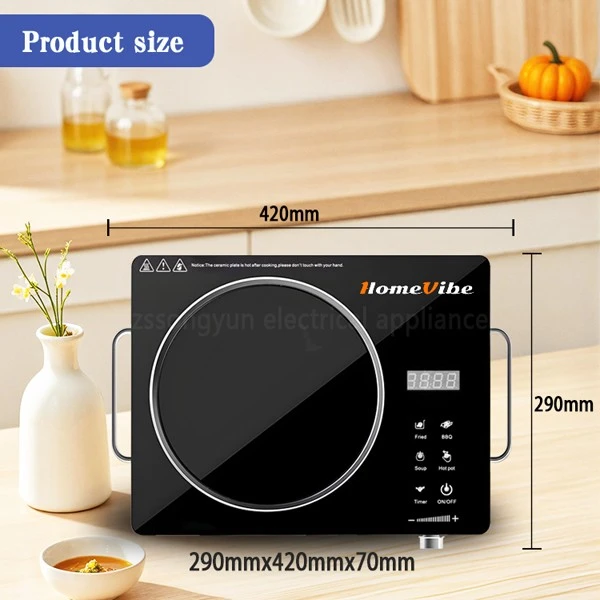
Surface Material
The material of the surface also plays a role in the stability of the induction mini stove. Different materials have different levels of friction and heat resistance, which can affect how well the stove stays in place and how it interacts with the surface.
Smooth, non - porous surfaces like granite or quartz countertops provide a good base for induction stoves. They are flat, heat - resistant, and have enough friction to keep the stove from sliding. On the other hand, surfaces with low friction, such as glass or polished metal, may require additional measures to ensure stability. For instance, using rubber pads or non - slip mats under the stove can increase the friction and prevent it from moving around.
Stove Design and Weight
The design and weight of the induction mini stove itself are significant factors. A well - designed stove with a low center of gravity is more stable. Stoves that are wider at the base and have a heavier weight distribution towards the bottom are less likely to tip over.
Some induction mini stoves are designed with rubber feet or non - slip pads on the bottom to enhance stability. These features help to grip the surface and prevent the stove from sliding, especially when there is movement or vibration during cooking. Additionally, the overall weight of the stove can contribute to its stability. Heavier stoves are generally more stable than lighter ones, as they are less likely to be affected by external forces.
Testing the Stability of Induction Mini Stoves
As a supplier, we conduct various tests to ensure the stability of our Induction Mini Stoves. These tests simulate real - world conditions and help us identify any potential issues before the products reach the market.
Static Stability Test
In a static stability test, the stove is placed on different types of surfaces and left in a stationary position for a certain period. We check for any signs of wobbling or movement. If the stove shows any instability, we make adjustments to the design or the feet to improve its stability.
Dynamic Stability Test
The dynamic stability test involves simulating cooking movements. We place a pot or pan on the stove and perform actions such as stirring, lifting, and moving the cookware. This test helps us evaluate how well the stove stays in place during normal cooking operations.
Importance of Stability for Consumers
For consumers, the stability of an induction mini stove is not just about convenience but also about safety. A stable stove ensures that the cookware remains in contact with the induction surface, providing efficient and even heating. This leads to better cooking results and reduces the risk of food being undercooked or overcooked.
From a safety perspective, a stable stove reduces the risk of accidents. A wobbly or unstable stove can cause the cookware to spill, leading to burns or damage to the surrounding area. In extreme cases, an unstable stove may tip over, which can be extremely dangerous, especially if there is hot oil or food on the stove.
Our Product Range and Stability Features
At our company, we offer a wide range of Induction Mini Stoves, each designed with stability in mind. Our stoves are built with a low - profile design and a wide base to ensure a low center of gravity. The rubber feet on the bottom of the stoves provide excellent grip on various surfaces, preventing them from sliding or tipping.
In addition to our Induction Mini Stoves, we also have other high - quality cooking products, such as the White Electric Cooker 60cm, the Black Electric Hob, and the Ceramic Hob With Knobs. These products are also engineered to be stable on different surfaces, providing consumers with a safe and efficient cooking experience.
Conclusion
The stability of an induction mini stove on a surface is a multi - faceted issue that involves the surface characteristics, the stove design, and the interaction between them. As a supplier, we are committed to providing high - quality Induction Mini Stoves that are stable, safe, and efficient.
If you are in the market for an induction mini stove or any of our other cooking products, we encourage you to contact us for more information and to discuss your procurement needs. We are here to help you find the perfect cooking solution for your home or business.
References
- "Induction Cooking: Principles and Applications" - A technical guide on the science behind induction cooking.
- "Kitchen Appliance Safety Standards" - A set of standards that govern the safety and stability of kitchen appliances, including induction stoves.
- "Consumer Reports on Induction Stoves" - Reports from consumers that provide insights into the real - world performance and stability of induction stoves.